

What is the CCAT?
The CCAT is a cognitive aptitude assessment used by employers to examine how quickly a candidate can solve problems, understand new information and reason with words, numbers and shapes. It is not a specialist knowledge exam. The challenge comes from switching rapidly between question types while the clock keeps moving.
Criteria describes three broad kinds of content: verbal, math and logic, and spatial reasoning. For targeted Aptimojo practice, we separate those into four diagnostic areas—Verbal, Numerical, Logical and Spatial—so you can see exactly where time and accuracy are being lost.
The format you should rehearse
- You have 15 minutes for 50 multiple-choice questions—an average of 18 seconds per question.
- Questions vary in difficulty, so equal time per question is rarely the best strategy.
- Calculators are not permitted; mental arithmetic and written working must be efficient.
- You are not expected to reach every question. Criteria states that fewer than 1% of candidates answer all 50.
- Your employer receives a raw score and percentile comparison after the assessment.
The practical goal is not to finish at any cost. It is to collect the greatest number of correct answers within 15 minutes.
What the four practice areas contain
- Numerical: arithmetic, percentages, ratios, averages, word problems and number sequences.
- Verbal: vocabulary, analogies, sentence completion and word relationships.
- Logical: rules, deductions, pattern recognition and identifying valid conclusions.
- Spatial: rotation, reflection, shape sequences and visual transformations.
A better preparation sequence
- Take one timed diagnostic before studying. Record attempted questions, correct answers and performance by area.
- Repair accuracy first on the weakest question families without a strict timer.
- Add short timed sets so recognition and decision-making become automatic.
- Practise full 50-question, 15-minute simulations only after the core patterns are familiar.
- Review every wrong answer and every question that took too long—even when it was correct.
Test-day approach
Start with the assumption that some questions should be left behind. If the method is not becoming clear quickly, make a deliberate move-on decision. Protecting 40 seconds can create two or three additional scoring opportunities later.
Keep written working compact, read the exact wording, and eliminate obviously impossible options before calculating in full. A calm skip is a strategy; getting trapped is not.
Four-question CCAT warm-up
Try one question from each Aptimojo practice area. Choose an answer before opening the explanation.
What is √1764?
Regular practice helped the analyst become more _____ at spotting errors.
Question: Should a park replace all of its grass with concrete? Argument I: No. Grass can support drainage and reduce surface heat. Argument II: Yes. Concrete is usually grey. Which argument is strong?
Which figure should replace the question mark (?) to complete the pattern?
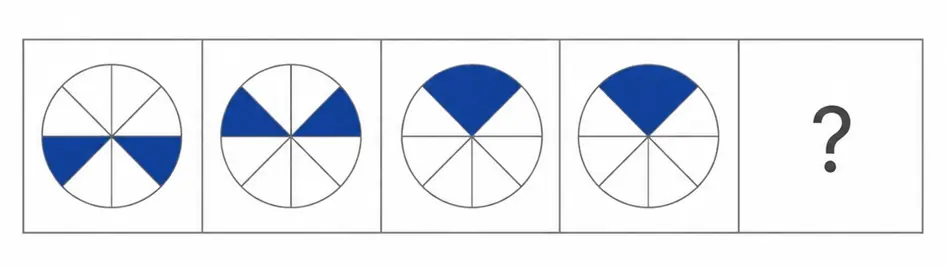
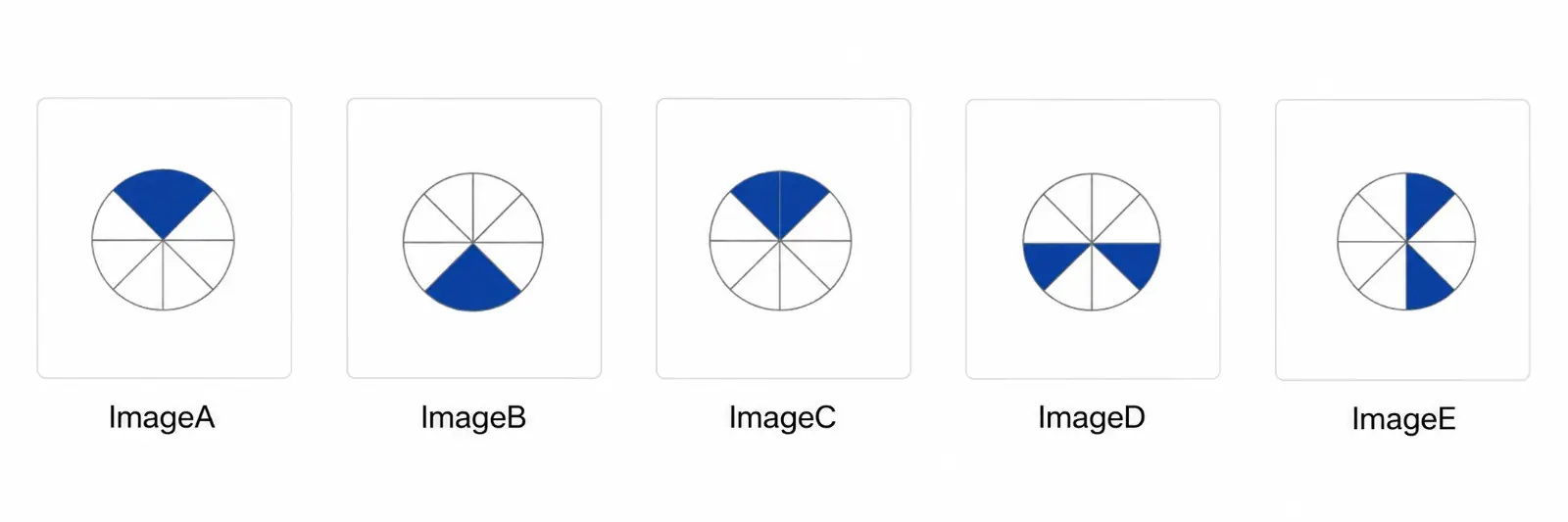
Original Aptimojo practice questions from the current CCAT question bank. These are independent preparation materials, not questions from an official assessment.
Frequently asked questions
How many questions are on the CCAT?
The CCAT contains 50 questions.
How long is the CCAT?
The time limit is 15 minutes, giving an average of 18 seconds per question.
Can I use a calculator?
No. Criteria's candidate guidance states that calculators are not allowed.
Do I need to answer all 50 questions?
No. The assessment is designed so that most candidates do not finish. Focus on maximizing correct answers rather than rushing blindly.
Official sources
Test-format facts in this guide were checked against the assessment providers' current candidate information. Always follow the instructions in your own invitation.